
You can learn the markets in two broad ways. Go solo and piece your system together step by step. Or work with a mentor who shows you how to think, plan, and execute with structure. Both paths can work. But which one will work better for you?
Key Elements of Trading Education
No matter which approach you try, there are three key layers of trading education that you’ll need to cover: foundation, edge, and execution.
- Foundation means market mechanics — order types, liquidity, sessions, and how news moves price.
- Edge means a small set of repeatable setups with if-then rules, timeframes, and context.
- Execution turns rules into action: position sizing, stop placement, and a clear plan for entries, exits, and no-trade conditions.
You can learn this solo or through trading mentoring/coaching; the difference is the speed and feedback. However, professional guidance is not a magic wand, and solo work is not a badge of honor by itself. Results come from deliberate practice, risk control, and repeatable routines. The right path is the one that helps you build those habits sooner and keep them for years.
What Solo Work Gives
If you’re self-driven and patient, the solo route can build strong intuition. You learn to filter noise. You write your own rules. You understand exactly why your edge exists because you built it.
These are the key upsides:
- Full control over methods, tools, and pace
- Lower direct cost at the start
- Deeper ownership of your process and results.
However, there are also trade-offs:
- More false starts before you find a working niche
- Slower feedback loops and more avoidable losses
- Higher chance of quitting when drawdowns feel personal.
What a Mentor Adds
A good mentor compresses time. You see working routines in action, not just in theory. You get guardrails for risk and entries. You learn how to review trades properly. And — this matters — you receive honest, specific feedback when your rules drift.
Mentorship is not only for beginners, however. Intermediate traders who “almost” have it often benefit the most. A few targeted changes in risk, timing, or market focus can shift a flat equity curve into a rising one.
You can get these benefits from a strong mentor or a guided trading education program:
- A clear framework for setups, risk, and execution
- Focus on one or two markets to remove noise
- Structured journaling and weekly reviews
- Accountability that keeps you from over-trading
- Practical drills: markups, playbooks, and scenario plans.
Speed, Cost, and Risk
Think in tradeoffs, not absolutes.
- Speed: Solo learners move faster when they already have research skills and a testing routine. Most others move faster with guidance because feedback trims dead ends.
- Cost: Solo appears cheap, but burn rate matters. Months of churn, platform fees, and tuition paid to the market can cost more than one good mentor.
- Risk: Clear risk rules beat clever ideas. If a mentor gives you strict sizing, stop placement, and a process for avoiding low-quality conditions, your downside usually shrinks.
Who Should Go Solo
You might thrive alone if the points below describe you:
- You enjoy research and logging data without prompts.
- You’re patient with long testing periods.
- You can cap risk and stay disciplined without external pressure.
- You already have a niche — specific timeframes, specific instruments, and clear playbooks.
If that fits, here’s what you should keep in mind when starting out:
- One market, one timeframe, two setups
- Fixed risk per trade and a weekly loss stop
- A journal that forces screenshots, context notes, and lessons learned
- A weekly review block to refine rules, not reinvent them.
Who Should Choose a Mentor
Choose guidance if you want fewer detours and stronger accountability. The right trading mentors will shorten your learning curve and keep your risk honest.
You’re a good fit if:
- You learn best by watching a process and then repeating it with coaching.
- You’ve tried for months but lack consistency.
- You make money in streaks and then give it back.
- Your losses come from late entries, revenge trades, or oversized bets.
Look for trading mentorships that include trade reviews, structured drills, and clear milestones. Programs that only offer theory or generic videos rarely change performance.
What to Expect from a Quality Program
Good trading coaching programs don’t flood you with indicators. They set rules for when to trade and — crucially — when to stand aside. They help you define a single market focus, position sizing, and a protocol for scaling in or out. They turn your hazy “edge” into if-then statements.
Look for these core elements:
- Defined setups with context (trend, volatility, structure)
- Entry and exit rules with examples of good and bad conditions
- Risk ladders for the new size only after proof of consistency
- Live or recorded trade reviews that highlight decision quality, not just P&L
- A process for mental reset after losses.
If you want a tighter path from beginner to competent, you can also learn trading from experts who publish full playbooks, annotated charts, and transparent stats.
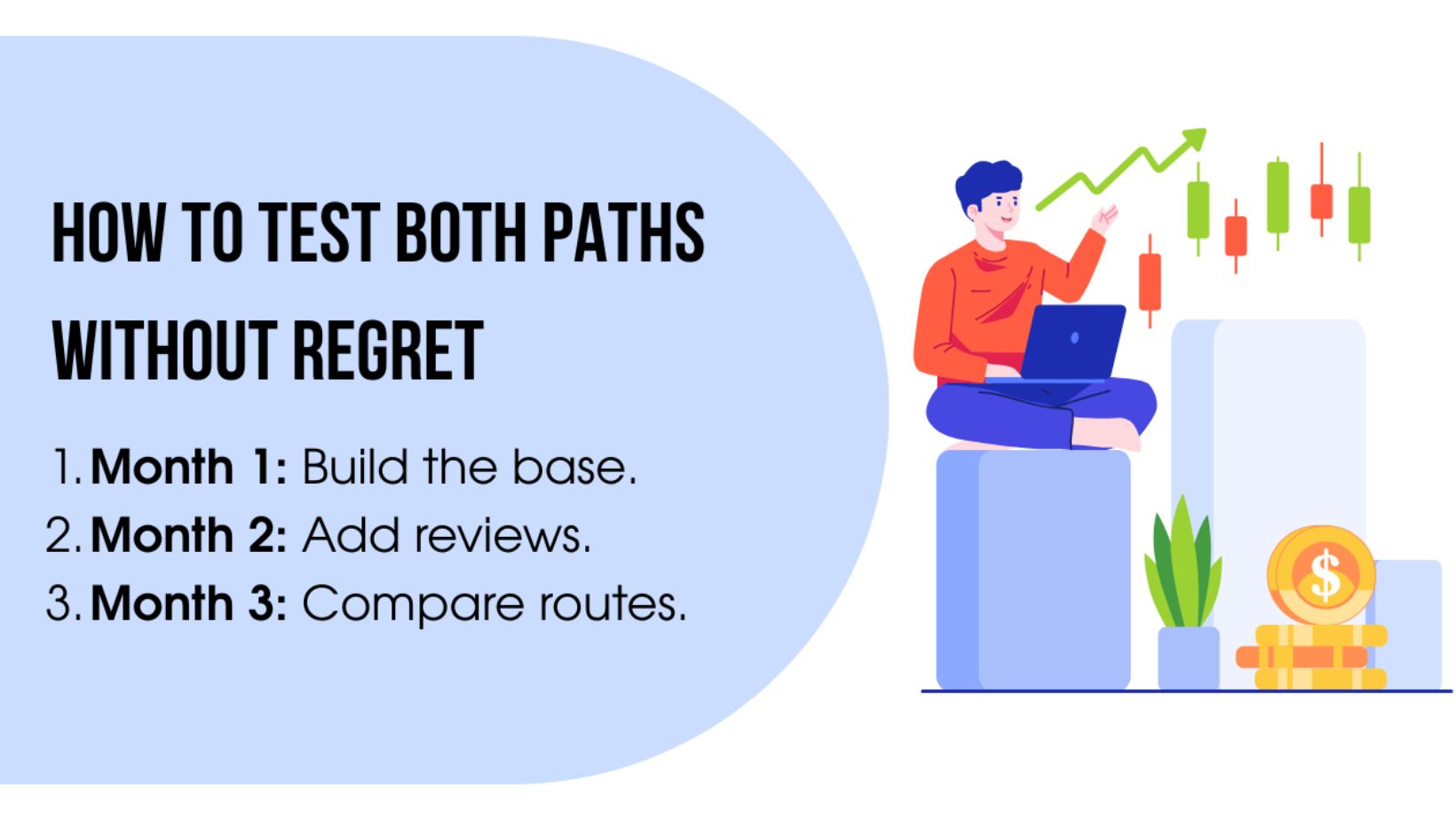
How to Test Both Paths Without Regret
You don’t need a permanent decision on day one. Set a 90-day plan.
- Month 1: Build the base. Pick one instrument and two setups. Cap daily risk. Journal every trade with screenshots and pre-trade notes.
- Month 2: Add reviews. Run weekly audits. Tag mistakes (late entry, early exit, size creep). Improve one variable at a time.
- Month 3: Compare routes. If you see progress but fight the same errors, try a mentor for four to six weeks. If you’re already consistent, keep going solo and add size slowly.
During this test, track plan adherence rate, average reward-to-risk, win rate by setup, and time in trade. Consistency across these stats signals real progress.
Conclusion
Both paths can lead to durable results. Solo work builds ownership and creativity. Mentorship builds structure and speed. The deciding factor is not the label — it’s the quality of your practice loop and your control of risk.
Here’s a short summary to help you decide faster:
| Self-Study | Mentorship/Coaching |
| You like deep self-study and can hold yourself accountable. | You want fewer detours and faster, specific feedback. |
| You want total control over tools and methods. | You struggle with rule drift or risk discipline. |
| You already have consistent stats and only need to fine-tune. | You do best with structured drills and weekly check-ins. |
In the end, the winning path is the one that gives you three things: a method you trust, a schedule you can keep, and risk rules you follow under stress. Choose the route that helps you lock those in.