
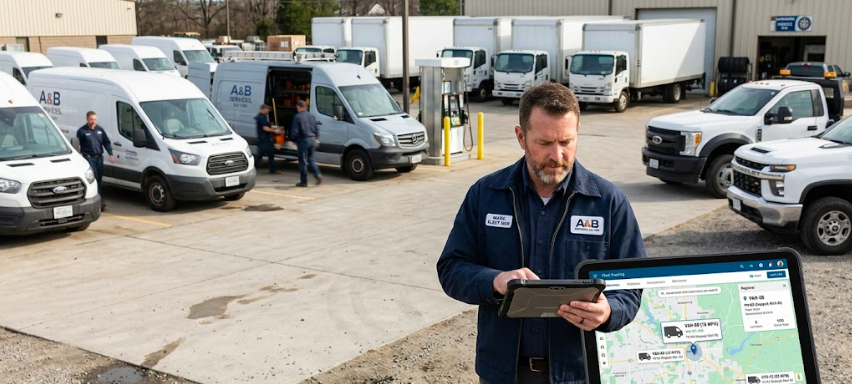
A commercial vehicle is not a personal car with a company logo on the door. It is a rolling cost center, a liability exposure, and often your most expensive asset all at once. Whether it is a delivery van, a service truck, a pickup hauling crews, or a box truck running routes, every hour it is on the road it is either making you money or quietly losing it. The hard part has always been telling the difference.
A GPS tracker for commercial vehicles closes that gap. It gives you a live picture of where every vehicle is, how it is being driven, and what it is costing you, so you stop managing your fleet by phone call and gut feel. This guide covers what commercial vehicle tracking actually does, the device types that fit different operations, and how to buy without getting trapped in a contract designed to outlast your patience.
What Counts as a Commercial Vehicle, and Why Tracking Looks Different
Commercial vehicles cover a huge range: cargo vans, service trucks, flatbeds, refrigerated units, passenger vans, and light-duty pickups doing heavy-duty work. What ties them together is that someone other than the owner is usually behind the wheel, and the vehicle exists to do a job, not to commute.
That changes what you need from a tracker. Consumer GPS is about finding a car in a parking lot. Commercial GPS is about accountability and efficiency across people you cannot watch directly: Did the tech actually arrive at the 2 p.m. job? Why did the van take an extra 40 miles? Is that engine fault going to strand a driver tomorrow? The answers live in the data, and a commercial-grade tracker is built to capture all of it.
The Core Features That Matter for Commercial Fleets
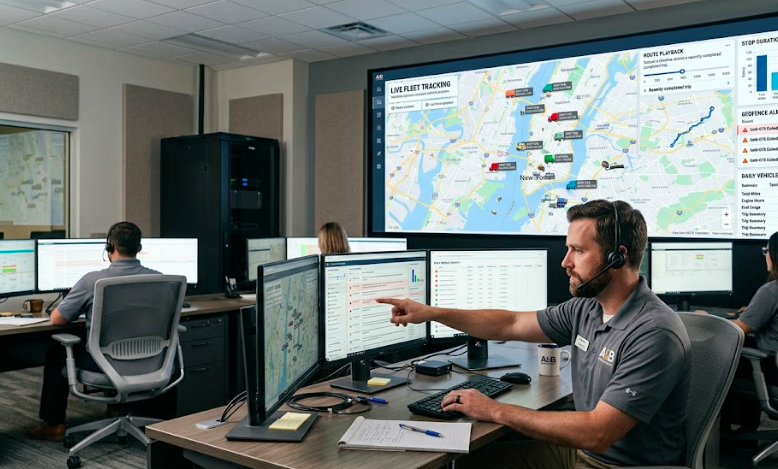
Real-time location and route history
Live location is the headline feature, but route history is the quiet workhorse. Being able to replay exactly where a vehicle went, when, and how long it stopped settles disputes, verifies job times, and exposes the side trips that pad your fuel bill. When a customer claims your driver never showed, the timestamped breadcrumb trail ends the argument in seconds.
Driver behavior monitoring
Hard braking, rapid acceleration, speeding, and cornering are not just safety concerns. They are fuel-burners and maintenance-shorteners. Tracking driver behavior lets you coach the habits that wreck tires, brakes, and miles per gallon, which turns a vague safety goal into measurable savings on the repair invoice.
Geofencing and alerts
Draw a virtual boundary around a job site, a depot, or a customer location, and get an alert the moment a vehicle enters or leaves. Geofencing automates the questions you would otherwise be texting drivers all day, and after-hours alerts flag the unauthorized weekend use that owners rarely catch on their own.
Engine diagnostics and maintenance
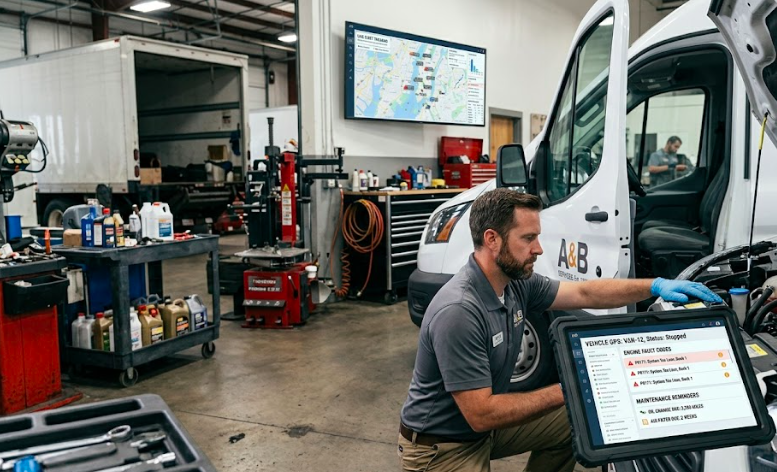
A commercial tracker that reads engine data can warn you about a fault code before it becomes a roadside breakdown. Scheduling maintenance by actual engine hours and mileage, rather than a sticky note on the calendar, prevents the surprise failures that take a vehicle, and the revenue it generates, off the road for a week.
Choosing the Right Device for Your Vehicles
There is no single best tracker for commercial vehicles, only the best fit for how each vehicle works. Here is the practical breakdown.
OBD-II plug-in trackers
For vans, pickups, and most light commercial vehicles, the OBD port is the fastest path to tracking. Plug it in, and you are live in seconds with both location and engine diagnostics. No install appointment, no wiring, and you can move the device between vehicles as your fleet changes. For operations that want to deploy fast and keep flexibility, this is usually the starting point.
Hardwired trackers
When you want the device hidden and tamper-resistant, hardwired is the answer. It connects to vehicle power, stays out of sight, and keeps reporting whether or not anyone wants it to. For high-value vehicles, theft-prone routes, or any case where you do not want a driver unplugging the tracker, hardwired earns its keep.
Battery-powered trackers
Trailers, towed equipment, and unpowered assets need a self-contained unit. Battery trackers place anywhere and run for weeks to years between charges. If your commercial operation includes trailers and gear that gets dropped and parked, combine vehicle tracking with asset and equipment tracking so nothing falls off your radar.
The ROI: What Commercial Vehicle Tracking Pays Back
Tracking is only worth it if the math works. For most commercial fleets, it works fast. Here is where the return shows up.
- Fuel savings from less idling, fewer unauthorized miles, and tighter routing. Idle reduction alone often recovers real money per vehicle each month.
- Lower labor cost from accurate timesheets and verified job arrivals, which ends the slow leak of padded hours.
- Reduced insurance premiums, since many carriers discount telematics-equipped commercial fleets that demonstrably drive safer.
- Fewer breakdowns through proactive maintenance, keeping vehicles earning instead of sitting in a shop.
- Stronger liability defense when a recorded route and speed log protects you against a false claim or a staged accident.
Stack those up and the tracker stops being a cost. It becomes one of the highest-return tools in the operation, usually paying for itself within the first few months.
Compliance: The Part You Cannot Skip
If your commercial vehicles fall under federal hours-of-service rules, tracking and compliance go hand in hand. An ELD compliance solution automates hours-of-service logging and drive-time monitoring, which keeps you audit-ready and your drivers legal. Pairing GPS tracking with compliance in one system means you are not juggling two vendors and two logins to answer the same basic question: where are my vehicles and are they running by the rules.
Matching the Tracker to Your Industry
A delivery operation and a towing company both run commercial vehicles, but they do not need the same things from a tracker. The smartest deployments start by matching the system to how the work actually happens on the ground.
For field service fleets, the priority is verified arrivals and accurate job times, so techs hit every service window and the office stops chasing status updates all day. For distribution and delivery operations, it is route adherence and on-time performance, keeping drivers on the planned path and customers informed. For towing and roadside assistance, it is knowing which truck is closest so you can dispatch the right unit and win the call before a competitor does.
The point is simple: the best commercial vehicle tracker is not a one-size-fits-all box. It is a system configured around the way your specific operation makes money, which is why talking to someone who understands your industry beats clicking buy on a generic device.
Avoiding the Contract Trap
Here is the dirty secret of the commercial telematics industry: the biggest names make a lot of their money on long-term contracts and the fees buried inside them. You sign for three years, your needs change in six months, and you are stuck paying for a fleet size you no longer run.
The better way to buy looks like this:
- Month-to-month flexibility so you scale with your actual fleet, not a contract’s assumptions.
- All-in pricing with no surprise activation, data, or platform fees stacked on top.
- Hardware that ships fast, often within 48 hours, so you are not waiting weeks to start tracking.
- Real human support by phone, text, and email, instead of a ticket system and a queue.
If you have been burned by a faceless giant before, it is worth seeing how a contract-free model compares directly. The BrickHouse GPS vs. Verizon Connect and BrickHouse GPS vs. Samsara breakdowns lay out the difference in plain terms.
Getting Your Fleet Tracked
Deploying commercial vehicle tracking should be simple, and with the right partner it is:
- Walk through your operation with a real expert who understands commercial fleets.
- Match the right device to each vehicle and asset type.
- Install fast, plug-in units in seconds, hardwired units in minutes.
- Activate, set your alerts and geofences, and start turning data into decisions.
BrickHouse GPS runs GPS fleet tracking built for operators who want visibility without the runaround. No long-term contracts. Devices that ship in under 48 hours. A lifetime warranty on an active plan, and real people who pick up the phone. Five vehicles or five hundred, you get the same straight deal.
The Bottom Line
A GPS tracker for commercial vehicles is how you stop managing your fleet in the dark. It turns fuel waste, padded hours, false claims, and surprise breakdowns into problems you can see and fix before they cost you. The vehicles are already out there working. Commercial GPS just lets you make sure they are working for you.
Ready to see what tracking your fleet actually costs? Get clear pricing and talk to someone who will tell you the truth, no contract, no fine print, no hold music.