

The pressure to produce content has never been higher. In 2026, social media platforms reward volume, speed, and authenticity in equal measure. Brands that can’t keep up with the pace of content creation risk fading into the background, losing visibility to competitors who post daily or even multiple times per day.
But here’s the challenge: traditional UGC (user-generated content) requires coordination with creators, time-consuming approvals, and ongoing costs. Even brands with strong creator networks struggle to maintain the velocity needed to stay relevant across TikTok, Instagram Reels, YouTube Shorts, and other fast-moving platforms.
This is where AI UGC generators, like the one from Topview step in. These tools allow brands to produce UGC-style videos at scale without relying on a constant stream of external creators. The result? Authentic-looking content that performs well algorithmically and resonates with audiences, all produced in a fraction of the time and cost.

The UGC Problem: High Demand, Limited Supply
UGC has become the gold standard for social media advertising. According to industry research, UGC ads generate up to 4x higher click-through rates and 50% lower cost-per-click compared to traditional brand content. Consumers trust UGC more than polished ads because it feels relatable, honest, and community-driven.
But producing enough UGC to fuel a modern content calendar is harder than it looks. Here’s why:
Creator Dependency Working with creators means negotiating rates, coordinating schedules, and managing revisions. Scaling this process across multiple products or campaigns quickly becomes logistically complex.
Quality Inconsistency Not every creator delivers the same level of quality. Brands often receive content that doesn’t align with their messaging, tone, or visual standards, requiring reshoots or edits.
Slow Turnaround Even with a strong creator network, producing fresh UGC videos can take days or weeks. By the time the content is ready, the trend it was meant to capture may have already passed.
Budget Constraints Hiring creators for every product launch, seasonal campaign, or promotional offer isn’t financially sustainable for most brands, especially small and mid-sized businesses.
These bottlenecks create a gap between what brands need and what they can realistically produce. AI UGC generators close that gap by making it possible to create UGC ads at the speed and scale modern marketing requires.
How AI UGC Generators Work
AI UGC tools use machine learning models to replicate the look, tone, and structure of user-generated content. Instead of hiring creators, brands input product details, images, or scripts, and the AI generates videos that mimic the style of authentic UGC.
Here’s what makes these tools effective:
Realistic AvatarsAI avatars can hold products, demonstrate features, and deliver testimonials in a way that feels natural and relatable. Powered by motion generation models like Seedance 2.0, these avatars move with fluid, lifelike precision—designed to look and act like real people, not robotic animations.
Natural Voice and Dialogue AI voice synthesis has improved dramatically. Modern tools can generate voiceovers that sound conversational, emotional, and authentic, complete with regional accents and tonal variation.
Platform Optimization AI UGC generators automatically format videos for specific platforms, adjusting aspect ratios, pacing, and duration to match TikTok, Instagram, or YouTube Shorts best practices.
Batch Production Instead of creating one video at a time, brands can generate dozens of variations in minutes, making it easy to test different hooks, CTAs, and product angles.
This workflow transforms what used to take days into something that can be done in under an hour.

The Business Case for AI UGC
The shift toward AI-generated UGC isn’t just about speed. It’s about making high-performing content accessible to brands that don’t have large budgets or dedicated creator teams.
Cost Efficiency
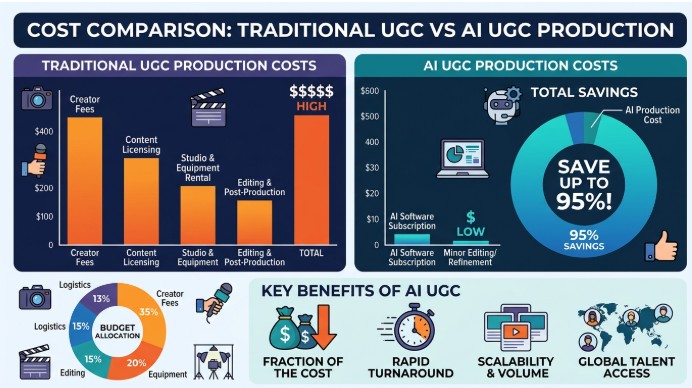
Traditional UGC campaigns require creator fees, production coordination, and often multiple rounds of revisions. AI UGC eliminates these costs, reducing the price per video by as much as 95%. For brands running multiple campaigns across different markets, this savings adds up quickly.
Creative Testing at Scale
Performance marketing thrives on testing. AI UGC generators allow brands to produce multiple creative variations for A/B testing without waiting weeks for new assets. Teams can test different hooks, messaging strategies, and visual styles to identify what resonates most with their audience.
Consistency Across Campaigns
One of the biggest challenges with real UGC is maintaining brand consistency. AI tools allow brands to control tone, style, and messaging while still producing content that feels organic and authentic.
Global Reach
AI UGC generators support multiple languages and regional accents, making it easier for brands to localize content for international markets without coordinating with creators in every region.
Real-World Applications
Brands across industries are already using AI UGC builders to power their content strategies. Here are a few practical use cases:
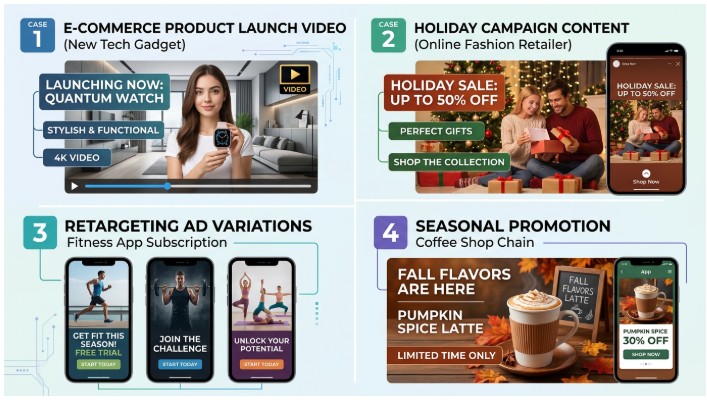
E-commerce Product Launches Instead of waiting for influencer partnerships to materialize, brands can generate UGC-style product demos and reviews within hours of a product launch, ensuring timely visibility.
Seasonal Campaigns Holiday promotions and limited-time offers require fast turnaround. AI UGC allows brands to create festive, time-sensitive content without the logistical delays of traditional production.
Retargeting Ads UGC ads perform exceptionally well in retargeting campaigns. AI-generated UGC videos can be quickly adapted to highlight specific products or benefits based on user behavior.
Affiliate Marketing Affiliates often lack the resources to produce high-quality video content. AI UGC generators level the playing field, allowing affiliates to create professional-looking product videos that drive conversions.
What Makes Topview’s AI UGC Stand Out
Topview’s AI UGC generator is built specifically for marketers and brands that need to scale content without sacrificing authenticity. The platform offers over 500 AI avatars, support for 140+ languages, and the ability to generate UGC videos from product URLs, text prompts, or images.
What sets it apart is the focus on conversion-driven content. Topview’s AI doesn’t just create videos that look like UGC. It replicates the structures, hooks, and pacing that high-performing UGC ads actually use. The platform analyzes millions of viral videos to identify patterns that drive engagement and applies those insights to every video it generates.
For brands, this means content that not only feels authentic but also performs well in paid and organic campaigns.
The Shift Toward AI-Driven Content Systems
As content demand continues to grow, the brands that succeed will be those that build scalable systems for production. AI UGC generators are becoming a core part of those systems, allowing teams to move faster, test more ideas, and reach more audiences without expanding headcount or budgets.
The goal isn’t to replace human creativity. It’s to remove the bottlenecks that slow teams down, giving marketers more time to focus on strategy, messaging, and creative direction while AI handles the mechanics of production.
In 2026, the ability to produce UGC at scale isn’t a luxury. It’s a competitive necessity. Brands that adopt AI UGC tools now position themselves to meet the content demands of modern marketing without burning out their teams or budgets.
The question isn’t whether AI will play a role in content creation. It’s whether your brand is ready to use it effectively.