
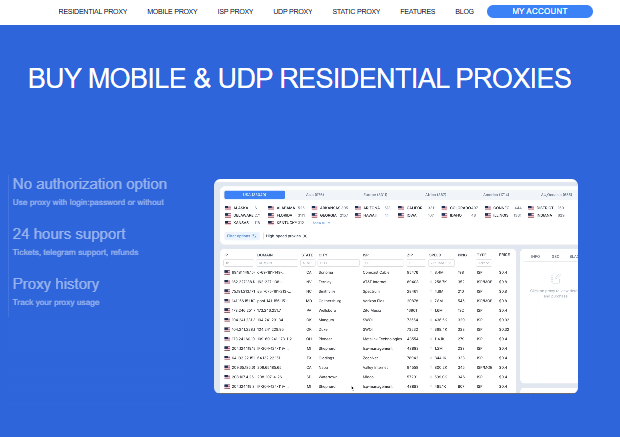
Choosing proxies becomes much easier when the platform gives users a way to judge route quality before purchase instead of asking them to trust vague promises. For teams that care about cleaner selection, INSOCKS proxies combines visible data, product separation, low fraud score messaging, blacklist awareness, and route history in a way that turns proxy choice into a scored decision rather than a blind buy. The service presents residential, mobile, static, ISP, and UDP products together with smart search, advanced proxy information, protocol coverage, support access, and dashboard transparency. That makes the platform especially useful for buyers who want to compare route cleanliness, trust profile, and task fit before they attach a proxy to real business work. ✨
Why proxy scoring matters in daily work
Most proxy problems begin before the first request is sent. The buyer often chooses a route that looks acceptable on paper but does not match the trust level, location profile, or session style required by the real target. That is why route scoring matters, because it gives the team a structured way to ask whether an IP is suitable before that IP enters production.
INSOCKS supports this kind of scoring by exposing several signals at once. The homepage highlights advanced proxy information, smart search, proxy ratings, average fraud score under 15 percent, blacklist checks, global coverage across 195 countries, and exportable proxy history. The terms section adds another useful layer by listing proxy type classifications such as ISP, MOB, COM, ORG, and DCH, and by explicitly saying that lower or zero proxy score seekers should search for ISP, MOB, ISP or MOB, COM, and ORG types. ✨
|
Scoring signal |
What INSOCKS shows |
Why it matters |
|
Geo data |
Country city and ASN level targeting |
Helps match the route to the real location need |
|
Ping and speed |
Visible route performance indicators |
Useful for comparing responsiveness before purchase |
|
DNS data |
Advanced proxy info includes DNS visibility |
Helps users judge route coherence and setup needs |
|
Blacklist status |
Routes are checked and some blacklisted socks are discounted |
Separates cheap routes from cleaner routes |
|
Fraud score |
Average fraud score under 15 percent is highlighted |
Gives a practical reputation benchmark |
|
Proxy type classification |
ISP MOB COM ORG and other labels are listed |
Helps choose lower score friendly categories |
Visible data helps replace guesswork
The homepage says advanced proxy data includes geo, ping, speed, DNS, and blacklist status, which immediately gives buyers more than a country flag and a price. That matters because route scoring needs several inputs, not one. A team that can compare these signals early is less likely to confuse low price with actual suitability.
Fraud score becomes a usable filter
INSOCKS says every IP goes through fraud score verification and blacklist checks before entering the pool, and the homepage states that the average fraud score is under 15 percent while industry averages run much higher. For a buyer, this creates a measurable signal that can be used during selection rather than after failure. A route with cleaner scoring often gives more value on protected targets than a route that is only inexpensive. ✅
Type labels matter more than they first appear
The terms page lists fixed line ISP, mobile ISP, commercial, organization, university, data center, search engine spider, and other classifications, then explicitly recommends ISP, MOB, ISP or MOB, COM, and ORG for users looking for residential style routes with low or zero proxy score. This is important because a route type is not just a label, but a clue about how it may be perceived by platforms that analyze source reputation. A better type match can prevent a team from buying the wrong category and trying to fix the mistake later with workarounds.
How INSOCKS makes route comparison easier
A useful comparison system needs more than technical terms. It should also connect product families to real kinds of work so that a team knows when one route class deserves priority over another. INSOCKS helps here by separating residential, mobile, static, ISP, and UDP products and by linking each one to specific business tasks on the homepage.
This kind of separation matters because different jobs need different score profiles and different kinds of trust. Residential routes are positioned for SEO tracking, price monitoring, and content verification, mobile routes for social media automation and ad verification, static routes for account management and whitelisted systems, ISP routes for higher speed scraping, and UDP routes for VoIP, gaming, conferencing, and streaming. That means route scoring should always be tied to workload type rather than treated as one universal number. ✨
|
Proxy type |
Strongest selection reason |
Main caution |
|
Residential |
Local realism for SEO and content verification |
May cost more than simpler server routes |
|
Mobile |
Stronger trust for social and ad environments |
Usually should be reserved for stricter targets |
|
Static |
Stable identity for logins and allowlists |
Not ideal when large diversity is needed |
|
ISP |
Speed with a cleaner provider profile |
Smaller diversity than broad residential pools |
|
UDP |
Correct protocol fit for live traffic |
Wrong choice for browsing and transaction work |
Residential works when local realism leads the scorecard
The homepage describes residential proxies as real household ISP addresses used for web scraping, SEO tracking, price monitoring, and content verification across 195 countries. That makes them a strong candidate when the route needs to look closer to an ordinary user connection in a specific place. If location realism and trust matter more than the cheapest possible throughput, residential often deserves the higher score.
Static and ISP routes solve different scoring problems
Static proxies are presented as dedicated addresses that do not change and are meant for account management, payment processing, API access, and IP whitelisted systems. ISP proxies are positioned as combining datacenter speed with ISP legitimacy, which makes them useful when throughput and a cleaner provider profile both matter. A team should therefore compare these two categories by continuity versus speed balance, not by price alone. ✅
UDP belongs in a separate class of comparison
The homepage says UDP support covers VoIP, gaming, streaming, and real time applications, which makes it fundamentally different from browser oriented route selection. Its score depends more on protocol fit and latency needs than on the same signals that dominate residential or static choices. That is why UDP should be compared only when the workload actually belongs to live packet traffic.
Step by step method for cleaner route selection
A proxy scoring system works best when the team follows the same order each time. Without a routine, even visible data gets ignored and the buying process falls back into habit. The structure below turns the homepage and terms signals into a practical selection method that can be repeated across projects.
Step one define what the target values most
Start by deciding whether the destination primarily cares about local realism, stable identity, carrier style traffic, high speed scraping, or real time protocol fit. The homepage already maps those needs to product families, which means the first scoring decision should be about task type rather than about the lowest visible price. A route always scores better when its core design matches the actual job.
Step two review visible route data before purchase
Use geo, ping, speed, DNS, blacklist status, and ratings as a pre purchase filter. This step matters because the platform gives these signals before activation, which means a team can eliminate weak candidates without paying to discover obvious mismatches. A cleaner shortlist saves both money and troubleshooting time. ✅
Step three use type labels to refine trust assumptions
After the first shortlist is built, check the type logic from the terms section. If lower or zero proxy score matters, the site explicitly suggests ISP, MOB, ISP or MOB, COM, and ORG as more suitable classes to search. This keeps the selection grounded in route identity rather than letting the team rely only on performance numbers.
Step four test through demo before scaling
The homepage says users can evaluate speed, IP quality, rotation behavior, and authentication compatibility through demo access before moving to production. This should be treated as the confirmation stage in the scoring process. A route that looked good in theory should still prove itself in a small controlled test before it gets approved for wider use. ✨
Informational block for practical route discipline
A good route selection method becomes stronger when it is supported by a few repeated habits. INSOCKS helps with this because the platform combines proxy history, exportable usage reports, low fraud score checks, and flexible plans with a visible no logs statement and usage rules. These elements make route discipline easier to maintain across time instead of only during the first purchase.
Recommended habits for teams
- ✅ Score routes before purchase instead of after failure.
- ✅ Match proxy family to workload before looking at discounts.
- ✅ Use type labels such as ISP and MOB when lower score matters.
- ✅ Test through demo before turning a route into a daily dependency.
- ✅ Use history to repeat strong choices instead of starting from zero each time. ✅
Pros and cons that should stay visible
- ✅ INSOCKS exposes route data, ratings, fraud checks, and history clearly enough to support a real scoring process.
- ✅ The platform separates product families by business use, which makes route comparison more practical.
- ✅ Type classifications in the terms section add another useful layer for cleaner selection.
- ❌ A visible scoring model still requires discipline, because cheap routes can remain tempting even when they are not the right fit.
- ❌ No platform feature can replace careful workload matching if the team ignores what the destination actually values. ❌
Where this scoring approach creates the strongest value
INSOCKS is most useful for teams that want route choice to become a cleaner decision process instead of a repeated experiment. The homepage and terms expose enough information to compare route families, trust signals, blacklist state, fraud score, and type classification before a route becomes part of a real workflow. That makes the platform especially practical for organizations that care about route quality as much as route availability. ✨
The strongest value appears when a team uses the platform as a scoring environment and not just as a storefront. Visible route data, category separation, low fraud score messaging, type guidance, history, and demo testing all support better choices when they are used together. Once that habit is established, buying becomes more deliberate, replacements become easier, and daily proxy work becomes much less dependent on guesswork. ✅